Sunday, September 15, 2019

Beto’s Gun-Grab is Why We Can’t Have Nice Things!

Beto is firing up the "ColdDeadHands" brigade.

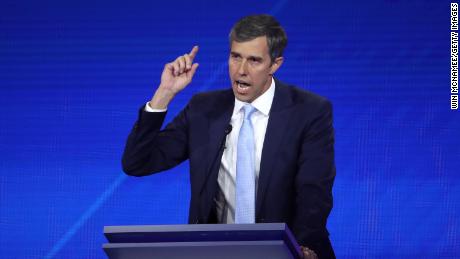
One of the most controversial statements to come out of the recent Democratic debate in Houston was Beto O’Rourke saying, “Hell yes, we’re going to take your AR-15, your AK-47. We’re not going to allow [those] to be used against our fellow Americans anymore.”

A lot of people were unhappy with this statement, and they might not be who you would think. Yes, gun-rights activists immediately jumped on the statement as confirmation that progressives do indeed want to take away everyone’s guns.

But many who have been arguing in favor of stronger gun control laws also were displeased, to some degree, with Beto’s statement. “Thanks a lot, Beto,” was probably going through a lot of people’s minds. 

For years, we’ve had to deal with the paranoia of gun-rights activists who insist, with little evidence, that Democrats are coming for their guns. I have had many arguments with these folks and they nearly always make a similar charge: “You won’t be happy until all Americans are disarmed,” or some variation of that statement. When they argue with me about gun control, they pretty much assume that I believe that all Americans should give up all their guns.

It doesn’t matter how much I try to correct the record: “I don’t want to take your guns, I just think background checks should cover all purchases,” I say, but they will not listen. They know my real agenda, much better than I do, apparently.

Now Beto has fed their suspicions by saying yes, he wants a program that will take military-style assault rifles away from Americans. He supports a mandatory buyback, instead of a voluntary one, for such weapons. This goes further than most Democrats have gone in the past—and further than the other Dem candidates for the Presidency.

O’Rourke has handed 2ndAmendment absolutists a hammer with which to pound all Democratic candidates who support gun control, the thinking goes. And the pounding will be relentless.

Sure enough, my most pro-gun Facebook friend recently posted: “If you think that candidate O’Rourke’s opinion on gun control is any different from the other Democratic candidates he faces, you’re being duped.”

Again, the assumption is that what Democrats *really* want is to take away people’s guns. That they march in lockstep. That the gun-control agenda seeks to deny people their rights, not save people’s lives. The pro-gun position on this issue is clear, consistent, and now has new fuel.

But here’s my conclusion about the political dangers of Beto’s willingness to “go there” on this particular issue: It doesn’t matter.

Gun-rights activists are going to say this anyhow. They’ve been saying it. They will continue to say it, no matter how much we protest, or show them evidence that taking away all guns is not our ultimate goal. In this debate, too often, facts don’t matter. Intentions don’t matter. Heck, 
results don’t even matter.

All we can do is what we always have done: be a voice of reason. Point out that 
different candidates have different positions. Point out that buybacks of assault weapons have been done in other countries to good effect—and gun violence rates there have dropped. Point out that the focus of most gun control groups has been on background checks and red flag laws—measures that most Americans, most gun owners, and most NRA members actually agree on. And most of all, point out the intolerable cost of continuing to do nothing, while our fellow Americans die on a daily basis.

There is a 
huge amount of support for reasonable gun control reforms in the United States. We should be glad that this is front and center in our national debate, though we grieve for the incidents that have made it so. This is an issue Democrats have been winning on. They will continue to win on it, because they have the support of the American people, including gun owners.

I believe Beto is sincere about his position on a mandatory buyback. I don’t happen to agree that the policy, as described so far, is the best solution to our gun violence problem. I believe it would be difficult if not impossible to enact a mandatory buyback program, not to mention very expensive. I also note that it’s a very politically expedient position for O’Rourke as well, boosting his stature and popularity in a presidential campaign that had been flagging. All these points can be discussed rationally among people of good will.

But that won’t happen with those locked into an irrational and unproductive position on a deadly serious problem. So, let them say what they want. The rest of us, the majority of Americans, can keep working on a solution to make our people, and our future, safer. 


Sunday, September 01, 2019

Five reasons why the Slippery Slope argument won’t stand up


Trump visits victims of a mass shooting. Apparently it went fabulously.  

Recently, President Donald Trump changed his mind again about universal background checks on gun sales. As he had before, he went from supporting expanded background checks to opposing them, and he used a well-known phrase to justify his opposition.

“A lot of the people that put me where I am are strong believers in the Second Amendment,” Trump said. “And we have to be very careful about that, you know, they call it the slippery slope. And all of a sudden everything is taken away; we’re not going to let that happen.” 

Trump’s mention of the slippery slope argument is typical of the dance he’s done after mass shooting events. In the days after such tragedies, Trump often moderates his tone toward gun control, only to harden it again when lobbied by the National Rifle Association (NRA).

But what is the slippery slope argument we hear about so often? First, we should note that any slippery slope argument is generally considered to be a “logical fallacy.” If a small step A is taken, the argument goes, then steps B, C, etc., will follow, until some bad final outcome is achieved.

But what first step leads us down the slippery slope? That’s the first problem with the slippery slope argument on firearms:

1) Slippery starting points—any change is bad.

Gun control opponents use the slippery slope argument frequently, but the descriptions of how the process will start often change, depending on who you talk to. Will it be the act of banning a specific weapon? Enacting more stringent background checks? Passing Red Flag laws?

“YES—all of the above!” say gun rights advocates. So, any state trying to get a handle on mass shootings or other gun violence is going to hear the slippery slope argument, no matter how benign or non-restrictive the proposal may be. Even universal background checks, which according to a Fox News poll, have 90 percent support from all voters and 89 percent support among Republicans, is considered the beginning of the long slide toward widspread gun confiscation.

It’s an argument against any action at all, no matter how reasonable.

2) It happens every time, except all the times it hasn’t.

America’s gun violence problem has a long history, and many times governmental bodies have passed laws to address the issue. They did so in the early years of the country, they did so in the Wild West days, and they did so during the Prohibition era, when machine guns and sawed-off shotguns were restricted. 

If the slippery slope argument is correct, how can it be that millions of Americans still own guns today? Why didn’t all these earlier efforts lead to confiscation of guns and the disarming of American civilians?

3) Europe’s example: much lower rates of gun violence; no tyranny.

The slippery slope argument also hasn’t worked out in modern Europe—a continent with some of the most free and prosperous nations on Earth.

Since the 1950s, we've seen almost 70 years of European democracies enjoying strong economies and high standards of living. Nearly all have more stringent gun regulations than the US and much lower rates of gun violence. 

Western European countries have not collapsed into tyranny or forsaken their commitment to civil rights. None of them have turned out the way gun rights advocates say that countries turn out when you deny people unfettered rights to guns. Could it be that guns aren’t the only—or even the main—guarantor of freedom and good government?

4) Brutal dictatorships aren’t caused by gun regulation.

Guns rights advocates often point to Nazi Germany, the USSR under Stalin, and other historical cases of genocide, and link these acts to gun control. In most of these cases, brutal military dictatorships stripped away any number of rights, including the right to bear arms, from ethnic or religious minorities, as part of their murderous regimes. These arguments oversimplify history and suggest that guns are a panacea against oppression. But the truth is more complicated. 

Armed-to-the-teeth civilian populations may be popular in movies or other fictional venues, but in real life, each situation is unique, and there is no silver bullet, so to speak, to address authoritarian governments. There are also many cases of oppressive regimes overthrown with peaceful protest. In general, it could be said that “guns don’t stop tyranny, people stop tyranny.”

5) Are we really so insecure about the Constitution? A strong democracy protects our rights without gunfire. 

The US has one of the most robust democracies in the history of the world. We don't need to stockpile weapons to preserve 
our way of life. Our system of checks and balances has ensured that even during difficult times, we can move forward as a nation and not descend into the chaos that has destroyed or crippled other countries. 

Expanding background checks, creating red flag laws, even banning assault rifles, none of these constitute an existential threat to our democracy. Mass shooters and everyday gun violence in the U.S. is an existential threat to all of us.

As our history shows, we can address gun violence without taking away all privately-owned guns. There is zero chance of the U.S. government taking “everything” away when it comes to gun ownership. But there is plenty of reason to fear the next mass shooting—and we shouldn’t use irrational excuses to avoid addressing our gun violence problem. 

### 

Hmmm, this must be the place...

After another long break, it's time to dust off Mod Lang again.

I've been working on a longer opinion piece about gun violence, something that seemed to need a different platform than the usual Facebook rant. So here I am. I considered submitting this to the local paper but I'm just too long-winded--I couldn't get near their 700-word limit. Maybe just as well.

So, welcome back, might as well use our namesake tune to kick it off...


Friday, March 24, 2017


Who's to blame for the defeat of the GOP health care plan?
Why, Obama, of course!


Today the question I heard over and over, as the Republican health care bill crumbled into dust, was, "Who is to blame?"

Obviously, the old cliche holds true. Who created a plan that insured tens of millions of Americans and gave them much more economic security? Who shepherded that plan through Congress? Who brought in stakeholders and got their buy-in? Who worked tirelessly to get Republican input, even though they ended up refusing to support a bill based on a Republican success story in Massachusetts? Who showed political savvy by making it a comprehensive, many-faceted effort that would difficult to undo? Who endured the pushback, both from a misinformed public and a Republican party that thought they could deny him a legacy? Who worked tirelessly to address problems that sprang up, from balky websites to Supreme Court challenges, with almost no support from a dysfunctional Congress? Who was, I hope, today sitting somewhere on a warm beach with a cold drink and a big grin on his face?

I think all Americans should take a moment this evening to silently say:

"Thanks, Obama."

Barack Obama wanted to do something no U.S. President had done: provide a universal health care system for a country that badly needed it. His ultimate success or failure is yet to be determined. But he got us much, much closer. We have a record low number of uninsured Americans in this country, according to Gallup. We have seen significant efforts to make health care more rational and efficient, even as costs continue to be too high. The ACA needs fixing, there is no doubt. The Republican plan was clearly not the correct fix. It would have made things much, much worse.

Whatever you think of Obama, it's clear that he accomplished all the things Trump has failed to do. He got a complex, difficult bill through Congress. He sold it to the public, at least enough to get 8 years of implementation... now it will be more than 8 years, apparently. He got his party unified in support of it, even at great political cost. He showed strength, toughness, and smarts. Have we seen that from the White House lately?

Trump is now saying he will let the current law fail and blame the Democrats. Well, besides the great compassion that shows for the American people, there are a couple questions that plan raises.

One--what if it doesn't fail? What if the states and the health care industry, realizing how royally screwed we all might be if incompetents and ideologues get their way, find a path to making the ACA work better, without the federal government's intervention? That actually would be a big win for conservative principles, although the conservatives might not realize it.

Secondly, what if it fails? We're in a situation now where Trumpcare is dead, and Obamacare could very possibly die from neglect and malpractice, with a Trump-led campaign of malign neglect from HHS. If this happens, many Americans will suffer, and their suffering will prolonged by a President who clearly doesn't understand the issues and doesn't really care to. Will the American people really blame Democrats, who passed health care reform and got it up and running? Or will they blame the party that can't shoot straight?

When Trump was bumbling through his presidential campaign, a lot of progressives said we were seeing the end of the Republican party. They said that Trump's defeat would split the GOP into two parts, the more traditional wing and the crazy Trump wing. It seems that even in victory, that split is happening, and the first casualty is governing. Trump's "art of the fail" has only clarified the divide among the Republicans. It's a little scary to contemplate where they'll go from here. It's even more scary to realize we all have to go with them.

In any case, what Republican senators once called "Obama's Waterloo" is still standing. It's too early to say that the attempt to repeal and replace the ACA was Trump's Waterloo, but one thing is for sure: Trump tried to take on Obama's legacy, and he got his ass thoroughly kicked.


Monday, March 20, 2017

Sunset is at 7:26 pm. 

At the end of this day, we know that:
1. Our president and his spokesmen are shameless liars.
2. The heads of the FBI, National Security, and the Justice Department all tell a story that directly contradicts what Trump says.
3. Trump's campaign members, possibly including the President himself, are being investigated for colluding with a foreign power in activities that have been called "an act of war."
4. Our President cannot stop himself from doing self-damaging things. This also applies to acts that damage the country.
This is not a sustainable state of affairs. I can only wonder when the GOP ship abandons this sinking rat.

Thursday, March 09, 2017


Yes, this is Obamacare Lite.
It’s also Obamacare Cheap.

I have to say, I’m a little surprised at the new Republican bill to reform health care: the American Health Care Act. It would appear that the strong pushback from constituents and stakeholders such as state governors is having an effect: Republican congress members have crafted a bill that does retain some of the signature elements of Obamacare.

Financial assistance to help Americans afford insurance? Check. Not allowing insurers to deny coverage due to pre-existing conditions? Check. A list of “essential benefits” that all plans must cover? Check. Keeping young adults on their parents’ plans? Check. Cadillac Tax? Check. (Yeah, that one surprised me.)

In short, when hard-right Republicans call this “Obamacare Lite,” they’re not wrong. The problem for Republicans is that while Americans agree with them that premium increases and taxes and less choice are all bad outcomes, they still believe that the government does have a role to play in helping everyone obtain health care. They agree with the spirit of the ACA, if not the letter of the law.

As CNN reports,  “The bill on the table right now is closer to a restructuring, than eliminating Obamacare.”

So Republicans are trying to thread the needle—get rid of the parts of Obamacare that people don’t like, while not throwing millions off of their insurance plans and letting them fend for themselves.

But there’s a bigger point—and a bigger problem—here, one that harkens back to one of the cornerstones of Republican principles. The AHCA is an effort to keep some of Obamacare’s reforms, but pay much less for it. They are pushing to cut the taxes, fees, and other elements of the ACA that conservatives are philosophically opposed to. They also believe the ACA imposes regulatory burdens on businesses that are cumbersome and unnecessary.

So, it’s Obamacare on the cheap. Unfortunately, in America, health care isn’t cheap. We have the most expensive health care system by far, with outcomes that are simply not as good as they should be, considering how much we pay for them.

The ACA had a number of initiatives that attempted to cut down on rising health care costs. So far, they’ve had limited success. And this new GOP bill simply assumes that more “choice” and less regulation will reduce costs. That’s more of a wish than a plan. In real life, cutting corners on health care often raises, rather than lowers, costs in the long run.

The truth is, the ACA probably should’ve put more money into providing health care, not less. The problem, for both insurers and consumers, is that the system continues to cost more than their budgets can cover. Yes, we should cut back on health care cost increases. But that’s a nut we still haven’t cracked—and the old mantra of getting government out of the way is simply not going to work. Reducing the number of insured Americans is not the way to cut costs. 

Today, any effort to cut back the scope of the ACA is going to be problematic for providers, state governments, and the consumers of health insurance. Providers will lose insured patients, and hospitals will be forced to do more charity care—which will force insurers to raise premiums. Insured patients will have higher copays and deductibles, and many will lose some or all of the subsidies. It’s hard to see this law not resulting in millions losing coverage.


At first glance the Medicaid piece stays pretty much the same until 2020, when states will start to have to pay more for that population. But… that’s just kicking the can down the road, isn’t it? And there’s troubling language in the bill suggesting that mental health treatment could be degraded over time with the Medicaid changes.

That brings us to my last point. Whether you call it Obamacare Lite or Obamacare Cheap, this proposed law is simply inferior to the current law. It will cover fewer people. It will almost certainly make health insurance more expensive for many.

So far, trying to create Obamacare Cheap has not met with a lot of support. Put aside the opposition from both ends of the political spectrum, the stakeholders affected by this bill are not fans. Groups like the American Medical Association, the American Hospital Association, and AARP have come out against the bill. The current medical director of Medicaid has spoken out against it. The health insurance industry’s biggest lobbying group, Americas Health Insurance Plans, has asked for major changes.

Also troubling is the fact that House Republicans are trying to push the bill through committees before the CBO can score it—a sure tell that Republicans know an impartial analysis will find the numbers in their bill will not add up.

As Ezra Klein plaintively asks in the video below, what’s the point of all this? If we end up with a fix for Obamacare that still does some of the same things, only not as well, what have we accomplished? Yes, Republicans can say they kept their promise. But if the country is worse off for it, is that really what we want?


Saturday, December 17, 2016


Democracy, defeated.


(Photo from the New Yorker)


On Monday, members of the Electoral College will meet and confirm Donald Trump as the President of the United States. There has been some talk of unfaithful electors or some kind of protest vote, but it seems certain that that Trump will get the necessary votes to become President.

This bothers me for all the reasons you might expect, but it particularly bothers me because Donald Trump did not win the popular vote. As in 2000, we are turning the whole country over to someone who does not represent the will of the country as a whole. Last time, the vote totals were so close that it was seen as a fluke. This time, it’s clear that we have a problem: Hillary Clinton won by nearly 3 million votes. That’s not close.

As the old saying goes: fool me once, shame on you. Fool me twice, and Ben Carson becomes the Secretary of Housing and Urban Development.  

The last time we installed a second-place finisher in the White House, the results were: 9/11 (ignoring or minimizing presidential briefings), the Iraq war (cherry-picking intelligence to push a preferred—and false—narrative), and the worst economic downturn in the lifetimes of most Americans (relaxing regulations and pursuing policies that favor the rich over the middle class).  We also saw completely unqualified people appointed to positions such as the head of FEMA.

Does that approach to governance sound familiar?

I don’t pretend we can undo the results of this election. And I understand that most Americans would rather not dwell on this unpleasant state of affairs. But I’m surprised there isn’t more of an outcry here. Once again, the American people are meekly accepting an election that doesn’t reflect the will of the governed. Clinton won the vote by more than two percentage points. She gathered more votes than any presidential candidate not named Barack Obama.

Yet we are preparing for the inauguration of Donald Trump.

Other writers have outlined the history and purpose of the Electoral College. My belief is that no matter how firmly entrenched this system is, it has been clearly demonstrated as contradictory to the spirit of the American democratic experiment, and manifestly damaging to our country.

No other election in our system is run this way. Governors, senators, representatives, mayors—all are elected by popular vote. Only in the most important election do we turn to an arcane system that gives some voters more power than others.

It is argued that this system allows rural, smaller states to have a say in the presidential election. That if we went by popular vote, only states with large, urban areas would be paid attention to by candidates, and that policies would then favor those living in the big cities.

As someone who lives in an urban area, that sounds like a nice change to me. But the truth is that in 2016, there were only a handful of states that the candidates paid attention to anyway.  Florida and Ohio got dozens of visits from the candidates. Pennsylvania, North Carolina, and Michigan were also frequent stops.

All of these states have rural areas. All of them have urban areas—which is where nearly all the campaign stops were held. California also has both rural and urban voters. The Golden State is one of the most important agricultural states in the country. Yet it, like so many other states, didn’t receive campaign visits from the candidates.

California is also widely credited with giving Clinton her winning margin. It didn’t matter. The election was decided before California’s votes were even counted. But Clinton’s totals reflect the will of the entire country; voters from Maine to Hawaii, who clearly preferred her over Donald Trump. That nearly three-million-vote margin was irrelevant, though. Even when it was not that close, second place got the trophy.

I believe we need to re-emphasize the concept of “one person, one vote.” That principle has been a cornerstone for our democracy—or republic, if you prefer. People have died for that principle. The U.S. Supreme Court has many times ruled that the doctrine is in keeping with the equal protection clause of the Constitution.

Yet twice now in recent history, some votes have counted for more than others, thanks to the Electoral College. The will of the people was not recognized in 2000, and again in 2016. We need to ask ourselves, what does our country stand for, if not democracy?

I believe we are seeing a power struggle for the soul of the country. We’re seeing it in places like North Carolina, where voting districts are gerrymandered to give Republicans voters more weight at the polls—and where the Republican lawmakers voted in by that twisted system just held a special session to strip the incoming Democratic governor of some of his powers.

We’re seeing it places like Michigan, where in 2014 and 2016, Democrats received more votes in state house races, yet Republicans hold a strong majority of seats. How? As a writer in the Detroit Metro Times reported: “Republicans redrew the state's 110 state legislative districts in 2010 in such a way that Democratic voters are herded into a small number of districts. The majority of Republican voters, conversely, are spread among a much larger number of districts.”

In addition, there’s the voter-suppression wave that has swept Republican-controlled states. When our country becomes a place where some voters count for more than others, where votes are suppressed and voters walled off into gerrymandered ghettos to reduce their power, we stop being a democracy. And if you want to call it a Republic, please recognize we're on the verge of creating a system that favors certain classes and races over others. That is not what America should be.


This flawed state of affairs should not be acceptable. It should not be shrugged off as, “that’s the way the system works.” The system is obviously not working. In this election, it did not honor the principle of one person, one vote. In the United States, democracy was defeated in 2016.


Wednesday, December 14, 2016

Yeah, about those predictions

I really thought I left a post up here acknowledging my complete wrong-headed wrongness about the election. But I guess I just didn't get around to posting it.

I was wrong.

It's been one disturbing thing after another--Trump's victory, the fact that HRC actually won the popular vote but lost usually reliable states like Michigan, Penn. and Wisconsin, the awful cabinet picks, the growing realization that our election was manipulated by the Russians... it goes on and on.

Pretty bad November and December.

And it's going to be a pretty bad four years, it looks like. But our country has faced crises before. This is right up there with the worst of them, as far as I'm concerned. Time to get to work.


Monday, November 07, 2016

Predictions for the 2016 Election

Yes, Mod Lang has been shockingly silent for this election cycle; blame it on Facebook. I've had several ideas for longer posts here, but the ease of creating, reacting and interacting to posts on FB has trumped (ahem) the more solitary-feeling, labor-intensive (ten minutes of work rather than ten seconds) experience of posting on a blog.

I've also been on Twitter! Like, six times!

Yeah, well, anyhow, I returned to good old ML for this day-before-election-day post, mainly because I wanted to go on a bit, lucky you. So I'll give you some predictions up top, and ponder what it's all about further down. (Hint: hell, hand basket, etc.)

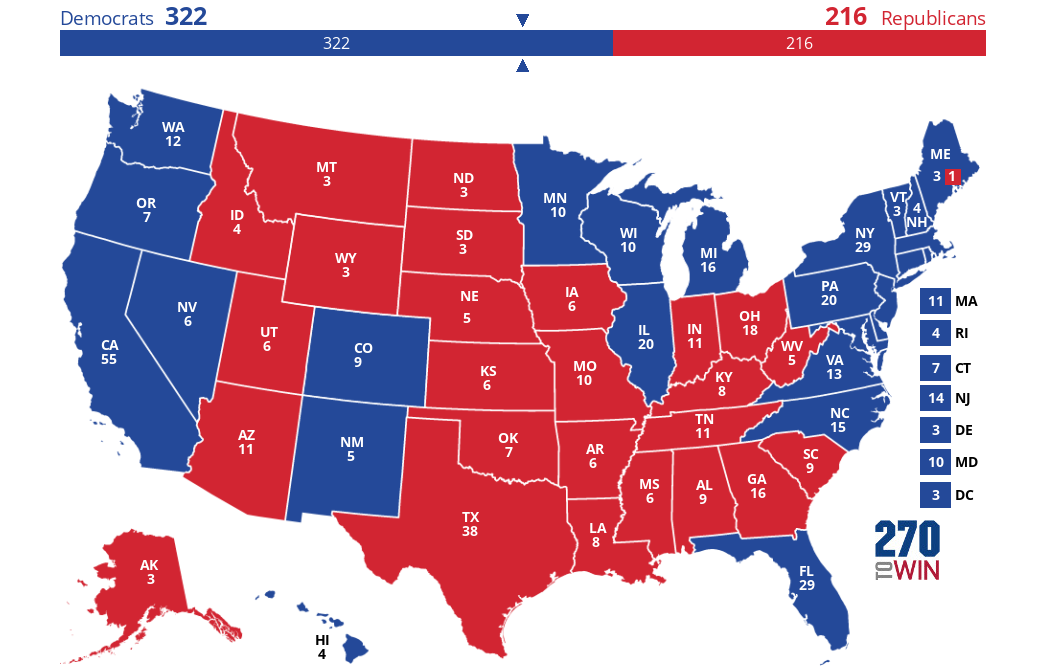
Long story short: I predict Hillary Clinton will win this election. Donald Trump is within striking distance of her--especially in some key battleground states--so I could be wrong. He could pull off on upset; even create a repeat of the 2000 election, when George W. Bush lost the national vote but won the presidency due to the electoral college. That could happen again this year. But I don't think it will.

I predicted early on that this would be a landslide, or at least a very strong win for Hillary. I still think that's possible, although probably not to the extent I thought a few months back. Here's my thinking: when a candidate alienates large segments of the population, say, Latinos, African-Americans, women, etc., then that candidate may struggle to find a strong national following.

Trump has outperformed expectations, as usual. The late-breaking FBI investigation/nevermind letters hurt Clinton, a bit. And her own shortcomings as a candidate also were a problem for her.

But we're hearing stories of a very strong turnout of Latino voters. I think it's very likely that women will vote for Hillary in unprecedented numbers, due mainly to wanting to make sure a man like Trump never gets the validation that the Presidency would confer. African-American voting may lag behind the historic highs that Obama generated, but again, it looks like there will be a relatively strong turnout there for the Democratic ticket.

We're a diverse country. Relying on angry, aging white people is simply not a winning strategy. And everyone tells me that a strong "ground game" counts--and the D's seem to have an advantage there. Unless the rumors of a "hidden" Trump vote come true to an astonishing degree, he will not be able to overcome Clinton's advantages with a wide range of voters. But as always, I could be wrong.

So here's my prediction: I'll go big and say that Hillary wins nearly all the battleground states. I'll give Ohio to Trump.


Click the map to create your own at 270toWin.com


That's a strong win. I could see it getting to 340 (add Ohio), or even 351 (Arizona). But that's probably wishful thinking. 

As far as what it all means, I think it's safe to say we've really seen some of the fault lines in our society in the past year or so. White working-class people seem really fed up--with something. I just hope it's not the fact that they're not in charge in anymore. Because that's not going to change. We're going to have a more diverse country. We should be celebrating that, not fearing it.

I know people who have had it rough, economically. I kind of get why they might favor Trump, though his personal flaws seem disqualifying to me, even if you like the idea of a wall. But I also know Trump supporters who have had it pretty good over the last couple decades. And they seem angry too, over things that don't make a lot of sense to me. Is political correctness really destroying our country? Apparently it *can* kill you to be nice.

I often have said this election is a national IQ test. And even if HRC is elected tomorrow, I'd have to say we failed it. If Donald Trump can convince 40+ percent of the American voters that he deserves their vote, then something's wrong. And all of us need to get to work figuring out the fix. Our media, our educational system, our social networking--all if it needs to be re-examined to figure out why so many problems with our society remain: so much racism, so much misogyny, so much violence, and so much stubborn ignorance--even when the facts are easily obtained.

We need to be better people in order to be a better nation. And that's on all of us. Let's keep talking, as a first step.


Sunday, July 24, 2016

Trump’s Republican National Convention: Oh the humanity!


The Republican National Convention wrapped up last Thursday night, and it was conducted with about the level the competence and civility we’ve come to expect from a Trump campaign production. Media outlets used the word “dark” to describe Trump’s message after his speech Thursday night, but another two-word description was also common for the convention as a whole: “dumpster fire.”

It was run poorly. There was public squabbling on the floor of the convention. It featured a rather lackluster lineup of speakers, including soap opera stars, marginal political figures, and of course, many, many members of Trump’s family.

The entire convention was bookended by two disasters: Melania’s plagiarism of Michelle Obama, and Trump’s Friday-morning talk to supporters, in which he reverted to style and went on a vindictive rant about Ted Cruz. Both were telling: the Melania speech neatly demonstrated both the campaign’s lack of competence and its penchant for denial—it took days for the Trump campaign to admit this was a simple mistake by a speechwriter helping Mrs. Trump with her speech. We got a preview of how small but significantly embarrassing mistakes would be handled by a Trump Administration: chaotically.
The Trump press conference on Friday morning nicely undermined the more conventional speech the night before (if by conventional you can include something that many said read better in the original German). At the event, instead of talking up party unity, Trump attacked Cruz and Kasich again, re-litigating old battles and puffing himself up in his typical manner. He made veiled threats to the GOP establishment, which he said had better raise enough money; and he said Republicans “have no choice” but to vote for him.

Of course, this tantrum was brought about in part by Cruz and Kasich, neither of whom have endorsed Trump. Cruz’ Wednesday night speech, delivered before poor Mike Pence accepted the nomination as VP, was another disaster, one that would be unthinkable in a normal election year. The candidate who came in 2nd to Trump gave an entire speech without endorsing the GOP nominee, and in fact, told Republicans to “vote their conscience.” The convention hall filled with boos. That’s some great prime time TV, right there. 

This points directly to the other huge stain on this convention—many establishment Republicans, to their credit, cannot support Trump. The extreme Tea Party wing, after decades of being sold a bill of goods chock full of racism, resentment, and victimization, are solidly behind the hateful rhetoric of Trump. The establishment, on the other hand, can at least see that Trump has no real allegiance to the GOP or any of its traditional issues. 

So we saw a convention where a GOP presidential contender who is also the Governor of Ohio skipped a convention in Cleveland. Other top Republican senators and leaders were also not in attendance. The unspoken message of Cruz, Kasich and many others was: “We’re not going to be associated with this clown. We’ll lose this year, regroup, and come back in 2020.”

The defections and pratfalls of the convention probably played a role in its underwhelming ratings. After much was made of Trump’s mastery of the television medium and ability to put on a great show, the convention itself was a letdown. Ratings were middling, with his big speech pulling in about 2 million more viewers than saw Romney’s speech four years ago, but fewer than the number who watched John McCain’s acceptance speech in ’08.

So where do we stand, now that the dumpster fire is guttering out? Conventional wisdom says candidates get a post-convention bump in the polls—I wouldn’t expect much of one after that performance, but maybe we’ll see a small one for Trump.

To me, the dynamics of the race stay the same: Trump pulls in the very rabid right-wing base and a sizeable portion of conservative leaners, who, in typical American fashion, will stick with their team regardless of the quality of the product. But he continues to alienate African-Americans. Latinos, women, and college-educated whites. Did the convention change that? No. Did it show him pivoting toward the center, as some predicted? No. Did it paint him as more human and likable, as many expect the Democratic convention to attempt to do for Hillary? No.The only things the Republican Party takes away from this convention are negatives. 

Preaching to the choir does not usually win you presidential elections. Everyone keeps saying this year is different. I am not convinced that it’s THAT different. After this ugly, divisive convention following an ugly, divisive primary, are there really that many people who don’t see Donald Trump for what he is? I keep calling this a national IQ test. And nothing from the Republican National Convention has suggested to me that this nation is dumb enough to elect Donald Trump.


(One of the songs Trump plays at his campaign events. Seriously.)

Wednesday, May 25, 2016

Clinton: still on track for a landslide

I know it goes against the current political conventional wisdom, but I still think there’s a pretty good chance that Donald Trump will lose by historic margins come this fall.

This latest goof-up by the Trump campaign is instructive, not because his campaign is incompetent (he’s hiring a lot of experienced pros) but because the candidate is going to continue to be true to his instincts, which will not work in the general election.

In this case, a Trump campaign flack accidently emailed Politico the latest plan on attacking Hillary Clinton over, get this, Whitewater—because Trump is, apparently, going to re-litigate the first Clinton Presidency and go all-in on the host of conspiracy theories that were whipped up by conservative scandal-mongers the first time around.

Raise your hand if that sounds like a winning strategy.

With the polls showing Trump tied with, or even leading Clinton, there’s been a lot of hand-wringing and ordering of fainting couches. Sanders supporters are jumping up and down saying they Told Us So—as if their candidate’s continuing pointless fight against Hillary isn’t helping to depress her numbers.

Yes, Trump demolished the Republican primary field with his nasty, juvenile, name-calling approach. Yes, he routinely lied and changed positions and showed his ignorance and got away with it. Yes, mainstream Republican candidates were powerless to bring the debate back to an adult level.

But look who he was running against. And more importantly, look who he was trying to win over.

The Republican base is completely comfortable with a no-facts, no-class, no-experience candidate. They WANT to blow up the country in order to save it. Years of fear-mongering and race (and gender)-baiting by Fox and other conservative media outlets have permanently cooked a sense of hopelessness, grievance, and anger into their political mindset. They want an outsider, and the more outside conventional standards, the better.

Trump blatantly lies and panders? They don’t care. Trump acts like a schoolyard bully? They love it. Trump talks casually about nuclear war? Hey, they learned in Sunday School that eventually Armageddon will come, so they don’t mind taking their chances. I mean, could that really be worse than continuing the policies of Obama? Really?

The Republican base has chosen not to be rational, not to be judicious, not to be, to use the appropriate word, conservative this time around. They don’t want an election—they want a primal scream. Trump fits the bill to a T.

The rest of the electorate will make a different choice. And as week after week of conspiracy theories, wild claims, hostility to women and minorities, and impossibly irresponsible policy stances pile up, many conservative and conservative-leaning voters who can still think rationally about the future of their country will start to waver. They may not vote for Hillary in huge numbers, but enough of them will, and many others will simply balk at pulling the Trump lever.

Trump is who he is. We can all see it. The majority of Americans are simply not going to fall for this huckster.


Tuesday, May 03, 2016

Trump seals the deal in Indiana

As noted below, I polled my conservative relatives at Christmas and found *none* of them seemed to like Donald Trump. They didn't trust his commitment to conservatives principles, they were offended by his superficial and obnoxious personality, and they were worried by his temperment and unpredictability.

I think most Hoosiers probably agreed with them, at that point. But now that it's down to Trump and Cruz, I expect many Indiana voters will have overcome their misgivings. I would guess that Trump will win by a big margin. Cruz has a toxic personality, despite his piousness. And conservatives want to beat Hillary. They think Trump is their best chance for doing that. So it will be Trump, probably by a large margin. 

On the Democratic side... I'm guessing Hillary, since there's a significant African-American voting bloc. There are white Democratic voters in Indiana. I knew of one, growing up. But I don't have a good sense of how they'll vote. Probably Clinton's relatively good standing with unions will help her too. So call it a Hillary win. 

So, here we are. Conservative voters continue to sow the wind. It will be an interesting fall.

Monday, February 29, 2016

I'm not a fan of revolutions


Super Tuesday is upon us, and I am truly grateful. I look forward to much less bitter infighting between the Bernie/Hillary camps on Facebook, for one thing. I guess I should be thankful that in Minnesota, we haven't had to go through the gauntlet that some early primary states have endured. For example, I've seen a total of one Hillary and one Bernie political ad as of today. Oh, and one Ted Cruz! Stand for liberty!!

As for me, I'll be voting for Hillary. I think Bernie has great ideas and great arguments. But his notion of a revolution amongst American voters is simply not realistic. I don't believe the majority of Americans are fully comfortable with the type of changes he's talking about. I think he's less electable than Clinton, for all her baggage. And if he were elected, I don't see any way he'd get his reforms through a Congress that is almost certain to be controlled, at least in the House, by very conservative Republicans.

Revolutions sound great but they're messy in reality, as Markos pointed out today. And those on the left *always* overestimate how much support their heroes have. All those people flocking to Trump are not an optical illusion. There really are a lot of Americans with, shall we say, less-enlightened views of the world. They were not ready for a moderate black president. They are not going to be accepting of a socialist white one.

And speaking of Trump, his revolution is continuing to flabbergast anyone who thought we were better than this. There is a very good chance that he will be trounced in the general. But the fact that he is winning easily among the Republican base is a testament to how base those voters have become, after decades of following false prophets like Limbaugh and Fox News. And it's not just the tea partiers, I'm afraid. There really are voters in this country who are willing to vote for an obvious huckster, just to shake things up. It's incredible.

So let them have their revolution. Hopefully, enough Americans can see through the manufactured discontent to understand that we need to bring down the barricades, not man them. Voting for Trump would make us as great as your average reality TV show. And one of the first things we teach our kids about television is this: what you see there is not how the world really works. Let's all remember that, OK?

As far as predictions, there's no reason to think Trump won't continue to roll on Super Tuesday. Rubio's rather pathetic stab at besting Trump in the sandbox won't help, or at least it won't help much. My question is whether Cruz survives after tomorrow. Where else can he turn to for a victory, after the southern states have mostly voted?

Also, why is Ben Carson still talking to us? Tell me how to make it stop.


Sunday, February 14, 2016

An eventful weekend


Over the weekend, I was driving across Wisconsin, the land of snowmobiles, camo as high fashion, and prisons (we saw three, which I found notable. Is Wisconsin really such a high-crime state?). Apparently some stuff happened while I was on the road.

First, we had a sandbox riot/debate by the leading GOP presidential candidates. Secondly, Supreme Court Justice Antonin Scalia passed away unexpectedly. The first event is worth commenting on, but the second is an earthquake, which is shaking up not only the Supreme Court's foreseeable future but the presidential race itself.

As far as the debate, well, the kids are definitely not all right. We've gotten to shouting and name-calling among these men who would be President. Can holding their breath until they turn blue be far behind? I was fortunate that I did not have to sit through this debate but just reviewing parts of it is pretty distasteful. Hopefully this is the low point of the campaign. But I wouldn't count on it.

In thinking about Scalia's passing, it occurred to me that he shares some things in common with GOP front-runner Donald Trump. (Please forgive my liberties with the present tense) Both are bombastic, larger-than-life figures. Both are very smart guys, though probably not as smart as they think they are. Both are entertaining, with Scalia's writing usually being a highlight of court decisions in recent years. I enjoyed reading the guy's take on cases, even when I thought he was totally wrong, which was often. And both can be wildly inconsistent; Trump has changed his positions 180 degrees on several issues, while Scalia would claim to represent tradition and disparaged "legislating from the bench" but at the same time threw out decades of precedents and sometimes his own rulings in order to reach decisions that fit his very partisan politics.

Scalia's passing means that another battle will be joined: Obama will try to do his job and appoint a new Justice, while the the leadership of the GOP will do what it sees as its job (oppose Obama at any cost) and try to run out the clock on BO's presidency before a Justice is appointed.

But aside from the presidential politics, the passing of Scalia means that a large number of SC cases that looked like they were going to turn out very badly for progressive causes will now have much less of an impact. There is some confusion, from what I've read, of exactly what will happen, but at the very least, many of the cases will not get a definitive SC ruling in the next term. The issues at hand affect unions, reproductive rights, affirmative actions, and other hot-button topics. The exit of Scalia is a huge deal for people following these cases.

For more, I urge you to read this in USA today and this in Scotusblog. Scotusblog in general is very likely the best authority on all things SCOTUS.


Tuesday, February 09, 2016

Will New Hampshire narrow the field?


Well, my Iowa predictions weren't so great, so it's time to double-down and see if I can get New Hampshire wrong as well...

The big question to me is whether Marco Rubio's meltdown at last Saturday's debate will stop or reverse his momentum after Iowa. Rubio did well enough in Iowa that it seemed moderate voters might rally round him to finally create a strong "establishment" GOP candidate that could challenge the really radical candidates such as Cruz and Trump.

But oh boy, did Rubio blow it in the debate. His repetition of a talking point about Obama was not only robotic, he used it to duck a question that had nothing to do with Obama. We *could* call this just a brain freeze that could happen to anyone, but to me it was up there with Rick Perry's "Oops" moment; a screw-up so revealing that it could derail the entire candidacy. And I *liked* Rubio as a candidate.

On the other hand, it's possible that the average New Hampshire voter, having been bombarded with information on the candidates, won't pay too much attention to one mis-step, or maybe enough  people have already made up their minds.

But I'll be watching for--and expecting--decent results for Christie and Kasich in the final vote totals. Heck, it wouldn't surprise me if even Bush outperforms his recent polls. If those establishment candidates do better than expected, this ungainly, over-populated field of Republican candidates will lurch on to the next state with nothing resolved. Which just helps Trump, and to a lesser extent, Cruz. If Trump underperforms again, as he did in Iowa, Ted Cruz could end up in a very strong position.

On the Democratic side, there won't be any big surprises, I expect. Bernie will win, Clinton might get within 10 points, and they'll move on to states much less likely to feel the Bern. I still think Clinton is the strong favorite for the nomination, but she has to be very careful not to alienate the young voters who love Sanders.

On the whole, the New Hampshire primary may bring a lot less clarity than some expected. Whether that's a good thing or bad thing probably depends on how much you're enjoying this spectacle.


Monday, February 01, 2016

Iowa Predictions


Yes, Mod Lang is back for another boring, run-of-the mill election year, with the usual politicians making their typical prom---waitaminute, this isn't a normal election year at all!!

Well, rather than bore you with yet another rundown of how crazy this year is, I'll cut right to the chase and make some predictions for the first big primary/caucus of the 2016 election year.

Thank God the voting is finally starting.

On the Republican side, I expect Trump to win; one of the big questions is how close Cruz can keep it, but Cruz has apparently decided to accelerate his schedule for self-implosion and has been looking pretty bad for the last couple weeks. (It had to happen, though. I mean, anyone who looks at this guy closely--that is, anyone who isn't a very particular type of conservative Christian voter--is going to quickly see the flaws in Ted Cruz. He's kind of a mixture of Richard Nixon and a TV evangelist, except he lacks Nixon's warmth and humanity.)

Rubio is positioned to do well enough to claim momentum going into New Hampshire. He looks to grab third place pretty easily, might even get close to Cruz' totals. And I honestly don't think anyone's going to care much about who comes in 4th-23rd. Maybe Kasich pulls into, like, 5th place... that might be a minor story.

On the Dem side, I think Hillary should win. Bernie has a lot of support among younger voters, but I'm not sure that will be enough. Hillary has got to have a pretty good ground game in Iowa by now. If Bernie were leading by a bit in a few polls, I'd say he might pull off the upset. But Clinton is leading in 7 of the top 9 polls listed by Real Clear Politics. She should win this one, concede New Hampshire to Bernie, and then roll the rest of the way. Probably.

And yes, Trump is a horribly bad pick for president. But that's where the R voters are, at least at this point with a fractured field of way-too-many candidates. Very likely that the anti-Trump vote will come together around Rubio or Kasich. Not sure it will be enough to stop him. Yikes.


Friday, January 01, 2016

Five things I learned from my conservative family members over the holiday break.

Despite my wife’s fervent request that I not mention Donald Trump during our family Christmas dinner back in Indiana, politics did indeed come up as I talked to my cousins, aunts, uncles, and parents. It’s fair to say they’re strongly conservative—Fox News-watching, Republican-voting, Tea Party-sympathetic Americans who have always considered my pro-gun-control, pro-ACA stances to be outrageously liberal.

But even though we live in partisan, contentious times, our Christmas dinner conversation proved that people who see the world very differently can still have a civil, even productive, discussion about politics. Your mileage may vary, of course. But here’s a short list of my takeaways from the conversation:

#5. Donald Trump is not that popular with lifelong conservatives.
Trump draws rabid crowds, dominates the cable new networks, and is the point man for a certain type of Republican voter. But my conservative relatives ranged from distrustful to disdainful of the former reality-TV star. “I just worry that he’ll fly off the handle,” one family member said. The brash, mercurial nature of Trump may be working against him with these older voters. It’s likely that my conservative focus group agrees with him on many issues. But they just don’t trust his temperament, or the commitment of what they see as a fair-weather conservative. On the other hand, they pointed out that many people they know are angry—even more so than usual—with our political system, so the allure of an outsider campaign is strong in conservative areas.

#4. The polls don’t lie: even fans of the NRA support expanded background checks.
You probably could not find a group of people more committed to the sanctity of the 2nd Amendment than those gathered at my parents’ dinner table. They absolutely believe in a constitutional right to bear arms, and they lean toward the notion that what we need is more guns, not fewer, to solve our problems with crime and gun violence. But after hashing through many, though certainly not all, of the talking points in the gun control debate, most of the conservatives at the table grudgingly conceded that something should be done. They generally agreed that closing the gun show loophole, and creating a more consistent system of screening for criminals, terrorists, and those with severe mental illness is something they could, in theory, support. Hey, I’ll take what I can get.

#3. The issue of mental illness could be an area of common ground
The discussion did take a turn I didn’t expect—the conservatives at the table seemed to strongly support addressing mental health issues as a way to respond to the gun violence epidemic. Now, I know the problems with this line of thought—because it’s simply wrong to assume that people with mental health issues are more dangerous than others. Mental health is a spectrum, nearly all of us will have issues at some point, and people with mental health illness issues are much more likely to be victims of gun violence, rather than the cause of it.

But instead of rejecting this topic as a red herring, maybe we should be seeing it as an opportunity to find common ground. There is a severe shortage of mental health providers in this country, and there are still too many insurers and employers who are not putting enough emphasis on treating and preventing mental illness. A national consensus on the importance of improving mental health diagnoses, treatment, and prevention would be a huge win for everyone. And if nothing else, it would help reduce the very high rate of suicide-by-gun in the U.S.

#2. There are still (plenty) of areas of disagreement.
There were, of course, a number of topics where little common ground could be found. Climate change is still dismissed as a serious problem—although the attitude has shifted in recent years. Instead of outright denial of the science of climate change, I heard more thoughts along the lines of, “it’s too expensive to fix,” or, “we’ve had climate change before and survived it.” I suspect this is roughly similar to going from denial to bargaining in the grieving process.

Another point of disagreement was regarding political correctness, of which my relatives often say (agreeing with Donald Trump) that it’s “ruining America.”

“How?” I asked. “You’re speaking your mind, I’m speaking my mind, and it’s for sure that Donald Trump says whatever he wants. So why are we so concerned that politically correct speech is damaging the country?” I didn’t get an answer that made much sense to me.

#1 We can actually talk about these things.
Arguing about politics on Facebook has become such a cliché that there are Facebook memes about arguing politics on Facebook. Many of us get frustrated with it, or angry. Some have dropped friends, or stopped talking about politics altogether. Everyone has the right to make that decision for themselves. But my conversation with my relatives reminded me that the rules for face-to-face discussion and debate are too often forgotten in online exchanges. And they shouldn’t be.

Be polite and respectful. Listen to the other person. Give them the benefit of the doubt; don’t assume that they’re ignorant or ill-intentioned. Treat them as you’d like to be treated. Use a little humor to lighten the mood. When the conversation hits a wall, be willing to agree to disagree.

At our Christmas dinner, when I expressed relief that we were able to discuss politics without getting into a heated argument, one family member said, “Well, you should hear what we say when you’re not around.” But all kidding aside, productive political debate does require us to be considerate of the other side and curb our more passionate (or extreme) impulses. That’s part of being civilized. And it’s the only way that we as a nation are going to move forward—this year or any.


Tuesday, May 27, 2014

Poor parenting skills? Seriously?

Oh, I so wish I could comment on the FaceBook thread that popped up on my feed today--the one where gun fans are bemoaning the lack of morality and good parenting skills that lead to all these mass shootings by young people. But since it's a "friend of a friend" posting, I could only share it. No thanks. But I'll comment briefly here.

I would really like to ask these folks: so which country should we turn to, to emulate their morality and parenting style? England? Germany? Japan? Sweden? Australia? Canada? Any of the other countries that have a) young people, b) mental illness, c) video games, d) crime, --but nothing like the amount of gun violence we have in the US--because there are many.

Seriously, which should we turn to? Because I have a feeling when we go hat in hand to Australia to ask how on earth they manage to avoid mass shootings, they're not going to talk about parenting skills or morality. They're going to say, "It's your f***ing guns, you idiots."

I haven't commented on the Santa Barbara shooting on FaceBook. Since I'm venting a little bit, I thought I'd bring my comments here. But there's much that could be said, and I feel for Richard Martinez as he voices the outrage and grief that many of us have felt as we witness one horrific shooting after another.

I do think there's a discussion to be had about the shooter's mental state and how he was able to be so well-armed after being so troubled. But it's not poor parenting skills that lead to close to 300 people being shot every day in the US. There's something else in the equation. And we all know what it is.

You want to watch a very uncomfortable 2:15 of video--watch the video below. You want to be ashamed of what some people in this country have become? Read the comments on the YouTube page below the video.

Thursday, July 11, 2013

Beer on the tracks—Bob Dylan at Midway Stadium in St. Paul, MN. 7-10-13

There were plenty of tell-tale signs at last night's Bob Dylan concert in St. Paul. The frozen clock, hands stuck at midnight, on the Midway Stadium scoreboard. The empty wheelchair, abandoned behind a swaying crowd near the stage. The blaring, Gabriel-like horn of the eastbound freight train that passed as Bob fired up his million-and-first rendition of "All Along the Watchtower" at the end of the night.

It would be easy to take such evocative moments and elevate them into something more meaningful. Maybe a bit too easy. The truth, if truth is relevant to a Bob Dylan performance, is a bit more nuanced. This was a good, not great, show from a legend who is well past his prime but still gamely putting himself out there night after night, still on the Never Ending Tour, entertaining young and old alike.

Dylan, for all his acknowledged brilliance and historical import, remains an acquired taste, an oracle to his fans and a mystery to the uninitiated. The same show that had a friend—who likes his music—expressing extreme disappointment about Dylan's Tom-Waits-with-a-headcold voice and the barely-recognizable rewrites of songs like "Tangled Up in Blue," had me in tears as Dylan leaned into his harmonica for long, drawn-out blasts that sounded like they had been torn out of his 72-year-old soul during "She Belongs to Me."

Sentimentalist that I am, I couldn't help thinking this might be the last time I see the man in the flesh (Also what I thought when I saw him in Rochester, what, 9 years ago? Maybe he'll outlive us all.) As with a treasured patriarch, some of us attend to every utterance and change of expression, drinking in the experience of seeing him one more time.

And others shrug and say, "Meh."

Mostly, I think, people had a pretty good time. Grainbelt Tall Boy cans littered the grounds postconcert, the craft beer wagon had an impressive line throughout the night, and the smell of something sweet and herbal was in abundance.

The fact that two of the warmup acts would've fit right in at any Grateful Dead concert certainly contributed to the mellow vibe. My Morning Jacket sounded good, and got a little help from Minnesota semi-legends Trampled By Turtles, who joined them for three songs. The hard-to-peg Jackets ranged from gentle love songs to psychedelic jazz-funk squawking, and frontman Jim James was certainly eye-catching, wearing a purple cape and what appeared to be a clock radio hanging from his neck. (Truth be told, I was pretty far from the stage at that point. So I'm not sure what that was.)

Wilco put on a pretty good set, including one of my faves, "New Madrid," from the Uncle Tupelo catalog. Speaking of Meh--I've liked, not loved, Wilco through their long years as counter-culture darlings. Last night, it occurred to me the band never really has much fire, although there was lots of smoke. It says something, I think, that their most compelling performance of the night was of a song that featured nonsense lyrics, written by Woody Guthrie as a lark ("Hoodoo Voodoo").

But maybe I was just in a bad mood after waiting 40 minutes in line for cheese curds.

In any case, the night's biggest disappointment (even worse than the cheese curds!) was that I missed Richard Thompson, who was a big part of the reason I wanted to get tickets in the first place. Thompson and his trio started promptly at 5:30 and played for 30 minutes. After fighting rush hour traffic to get to the stadium, I stepped out of my car in the parking lot and heard the last note of the last song of RT's set. Oh well.

Much has been made of Dylan's shoutout to Bobby Vee, and it was touching to hear him speak at length (for Dylan, at least) about the artist who, in the words of another friend, was "The first person to hire Dylan, and the first person to fire him." We didn't see Bobby Vee onstage, but he was there, per Dylan, and he had to be smiling with the rest of us, proud that the kid had done good. Seated at his piano, Dylan seemed genuinely pleased to have pulled off the cover of "Susie Baby." That little glimpse of vulnerability was perhaps something new to even the most veteran Dylan fans.

Three-quarters of the way through the set, Dylan wandered over to stage's only prop, a 6-foot-tall flame that burned in a cage-like enclosure through the night, and seemed to warm himself briefly. Just another old man staring into the fire, perhaps, recalling other shows and other days. But what days. And what a flame.